
Mukanya Kude

Mukanya Kude; Acacia Xanthophloea

Mukanya Kude (Acacia Xanthophloea) is a tree which tends to grow in swampy areas in the Southern and Eastern Africa’s. The tree has a somewhat yellow bark from which its Latin name derives. The common name for Mukanya Kude is 'Fever Tree', as at the time European settlers believed that malaria fever stemmed from these trees, instead of the real culprit that inhabits the same swampy areas: mosquitoes.
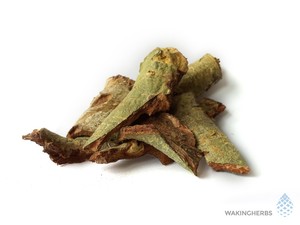

Image result for Mukanya KudeIn African culture, particularly among the Zulu's, the bark of the Mukanya Kude is well known for its ability to induce lucid dreams. These dreams are presumed to be visionary and prophetic.


UBULAWU DREAM HERBS


Mukanya Kude belongs to the so called ‘Ubulawu’ dream herbs. This is the name associated with a series of plants from Southern Africa that are used for visions and vivid dreams. It is believed one can communicate with the ancestral spirits and gain special insights and answers through use of the Ubulawu herbs.


MUKANYA KUDE - EFFECTS


Not much is currently known about the effects of the bark, other than the information passed on in African culture and traditions that it can provide lucid dreams and grant spiritual insights.


Like with all Ubulawu herbs, it is believed that if you focus on one question before going to sleep, you'll receive the answer in your dreams.


MUKANYA KUDE - USAGE

The Zulu's prepared the bark in an infusion of various potent dream herbs, but it can also be taken on its own as a tea

More: azarius.net/smartshop/herbs/lucid-dream-herbs/mukanya-kude-acacia-xanthophloea/

Comments

Popular posts from this blog

Uvuma-omhlope

Uvuma-omhlope; Synaptolepis Kirkii Uvuma-omhlope (Synaptolepis Kirkii) is a bluish-green shrub with striking porcelain white roots. Kirkii is traditionally used by the Zulu and Xhosa to induce spiritual visions, trances and dreams. The roots of the Uvuma-omhlope shrub contain a potent neurotrophic called kirkinine. Neurotrophins are a family of proteins that induce the development and function of neurons. UBULAWU DREAM HERBS Uvuma-omhlope is one of the so called ‘Ubulawu’ dream herbs. This is the name associated with a series of plants from Southern Africa that are used for visions and vivid dreams. It is believed one can communicate with the ancestral spirits and gain special insights and answers through use of the Ubulawu herbs. UVUMA-OMHLOPE EFFECTS There has not been extensive research into the workings of Uvuma-omhlope, but based on traditional use and user experiences, the effects are very similar to African Dream Root (Silene capensis). Uvuma-omhlope encoura...

Ubhubhubhu

Ubhubhubhu; Helinus integrifolius Ubhubhubhu is the Xhosa name for a South African herb also known as Helinus integrifolius, though the common name is unknown. Little information can be found on either name, though a study into Xhosa plants and their western names by the South-African Rhodes University suggests the herb may be closely related to the Ilex mitis, a tall evergreen tree indigenous to South Africa. The Xhosa would use Ubhubhubhu in an ‘Ubulawu’ mix. An infusion was taken orally at the initiation of diviners to strengthen memory and give the initiate keen powers of observation. UBULAWU DREAM HERBS Helinus integrifolius is one of the so called ‘Ubulawu’ dream herbs. This is the name associated with a series of plants from Southern Africa that are used for visions and vivid dreams. It is believed one can communicate with the ancestral spirits and gain special insights and answers through use of the Ubulawu herbs. UBHUBHUBHU EFFECTS Helinis integrifolius ha...

St John's wort

St John's wort : Hypericum perforatum St. John's wort (Hypericum perforatum) has a history of use as a medicine dating back to ancient Greece, where it was used for a range of illnesses, including various nervous disorders. St. John's wort also has antibacterial, antioxidant, and antiviral properties. Because of its anti-inflammatory properties, it has been applied to the skin to help heal wounds and burns. St. John's wort is one of the most commonly purchased herbal products in the United States. [It] is a flowering plant of the genus Hypericum and has been used as a medicinal herb for its antidepressant and anti-inflammatory properties for over 2,000 years. The Greek physicians of the first century recommended the use of St. John’s wort for its medicinal value, and the ancients believed that the plant had mystical and protective qualities. 35 St. John’s wort uses, dating back to the ancient Greeks, included treatment for illnesses such as various nervous ...