Apothecary rose; Rosa gallica
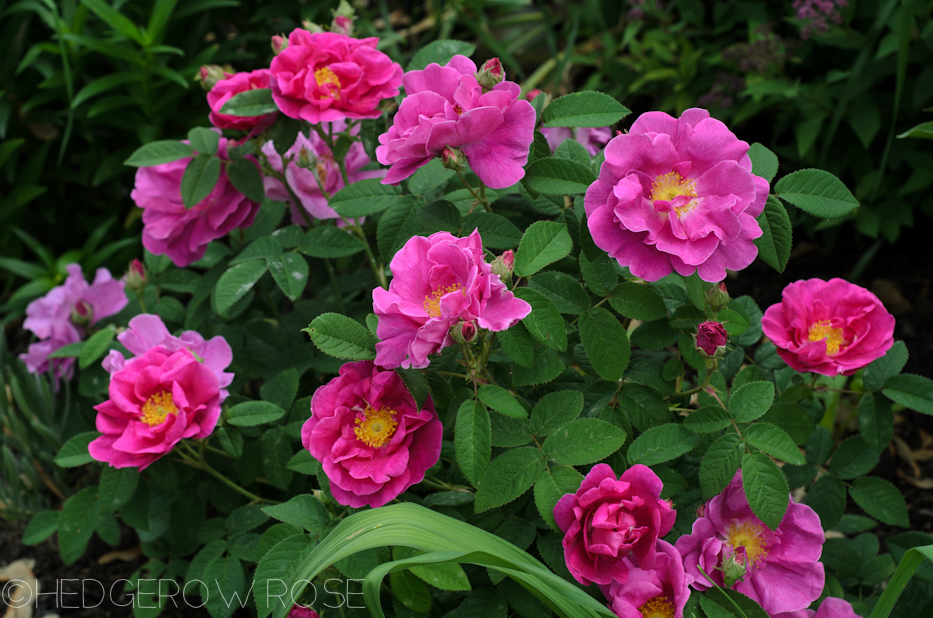 A native of Persia (Iran) that was described by the Ancient Greek poet Sappho as “ the queen of flowers”, this rose has had many uses over time. The Ancient Romans consumed the petals as food and marinated them in wine to use them as a cure for hangovers. Avicenna, a famous eleventh century Arab physician and philosopher living in Moslem Spain, prepared rose water from the petals that he used in treating his patients for a variety of ailments. Knights returning from the Crusades brought the plant to Europe. It was grown chiefly in monastic gardens for medicinal purposes. In the Middle Ages, the blossoms were used in aroma therapy for the treatment of depression. In the nineteenth century beginning in the time of Napoleon, French pharmacists grew them in pots at the entrances of their shops, hence the origin of the common name Apothecary Rose. The Apothecary Rose became the professional symbol of the pharmaceutical profession much as the balanced scales became the professional symbol of the legal profession. French druggists dispensed preparations made from this rose to treat indigestion, sore throats and skin rashes.
The plant is native to southern and central Europe eastwards to Turkey and the Caucasus.
More: www.piam.com/mms_garden/plants.html
en.wikipedia.org/wiki/Rosa_gallica

Comments
Post a Comment